
HUSARCH Conversations: Deeta Bernstein + Chyanne Husar
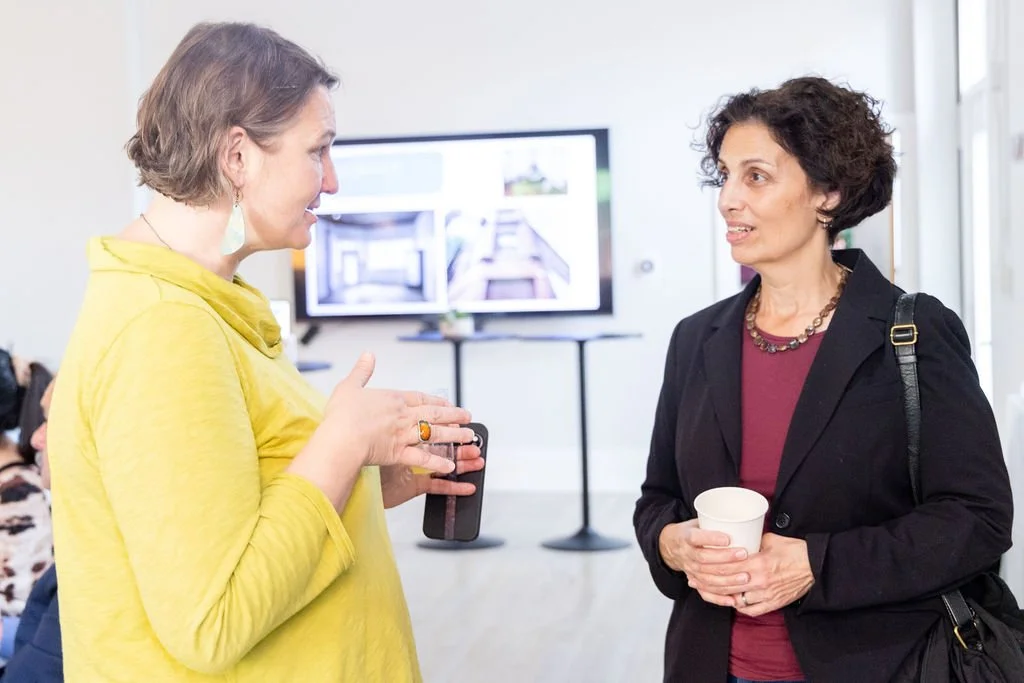
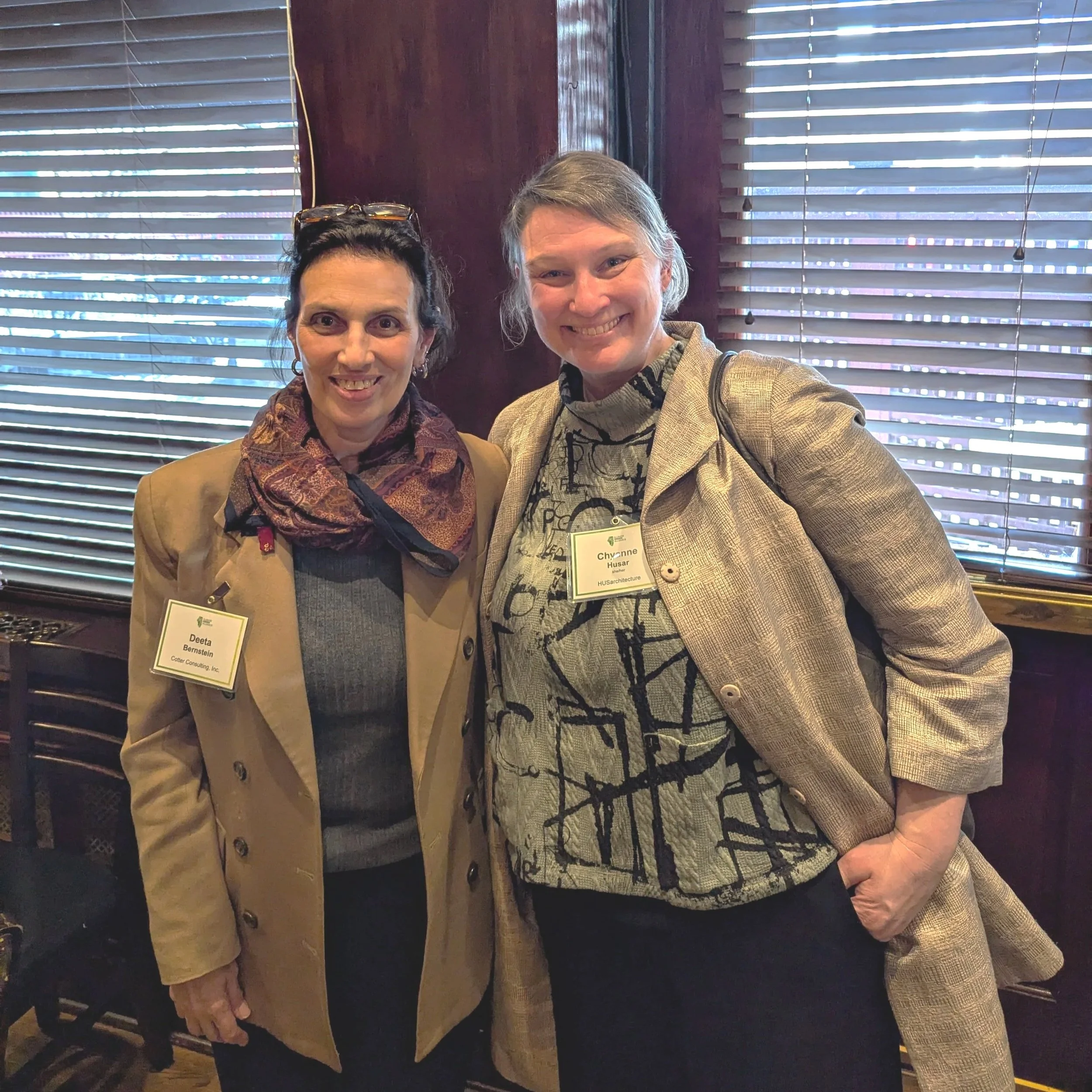
Today, we’re sharing a conversation with Deeta Bernstein, colleague, collaborator, mentor, and longtime friend of HUSARCH’s founder, Chyanne Husar.
Deeta has spent much of her career working at the intersection of sustainability and program / project management, largely for public sector clients. She’s a project management and sustainability professional with over 30 years of experience leading and implementing cutting edge sustainable projects and initiatives, but if we had to describe Deeta in a single phrase, we’d say: she’s a master implementer. Her superpower (well, one of her superpowers), is seeing both the big picture and the many details required to bring a vision into reality.
As one of our fiercest mentors and someone who has inspired us again and again, it’s particularly apt that we spoke with Deeta during Women’s History Month. The conversation was a bit of our past, present and future. We worked closely with Deeta to help the Public Building Commission’s transition to LEED v4 and we are looking forward to preparing for the v5 transition and we both happen to see the Energy industry as a big part of our future. Come join us!
A path guided by curiosity
In college, Deeta majored in the natural sciences, but toward the end of her senior year she took classes that led her toward architecture. In graduate school, Deeta maintained her scientific eye and regarded buildings through the lens of "Okay, that looks great, but how does it perform?". Architecture jobs were scarce after graduation, but she landed her first job in project management and loved how it fit both her skills and her disposition.
In her work today, Deeta brings her training in the sciences and architecture along with her project management experience. With every project she works on, Deeta engages all three perspectives – asking questions as a scientist, an architect, and a project manager.
The only woman at the job-site
Like many women in the building industry, Deeta was often the only woman at the jobsite or the conference room. Over the years, she’s been a mentor to other women in the field and has watched as the workforce has become more balanced; still, Deeta notes, we have a ways to go. There’s inequity in how women and men are perceived and who is labeled an expert. “Women still have to prove their expertise; for men, it’s assumed.”
Deeta credits the next generation of leaders, including her daughters,with helping her recognize where societal biases have become internalized. “So subtle! Once recognized, however, it becomes easier to trust your own knowledge and expertise.”
Chyanne can relate. “I really appreciate you sharing areas where you’ve struggled, Deeta. You have always seemed to carve a path forward and to have an answer. I’ve always appreciated your leadership. As someone who has struggled with imposter syndrome, it can take a lot of self work to find that confidence in your abilities.“ Chyanne also found younger generations helped her identify inequalities and gas lighting which in turn has helped her manage internal fears.
Like the scientist that she is, Deeta hypothesized that the best way to solve for it, is to embrace the change we want to see.
Meaningful change happens through collaboration
Much of Deeta’s career has involved public-sector work, including a number of years at the Public Building Commission of Chicago, where she serves as Sustainability Manager for a major capital development program.
There, she’s helped guide sustainability across a large portfolio of public projects—from schools to municipal buildings—often coordinating across multiple stakeholders. In this role, she’s seen that meaningful change happens best through collaboration.
Deeta and Chyanne met in 2015 through the LEED work on a public school addition which was seeking LEED Silver. It was Chyanne’s second project serving as a construction coordinator and Deeta remembers giving Chyanne “a hard time” (said with a smile) when she first came on board, wanting to be certain Chyanne understood the science of sustainable design. Chyanne remembers their work together as a “crash course” that informed how HUSARCH shaped its LEED process and helped cultivate a sustainability consulting practice. Both women remember the project as the beginning of many years of collaborative efforts that have hopefully helped shape future generations of sustainability activists.
Supporting the quickening of a “sustainability mindset”
Today, Deeta serves as a Director, Public Buildings at Consertus, a firm recently formed from the merger of several project delivery organizations, including Cotter Consulting, where Deeta spent many years. The new organization combines expertise from firms across the country, opening the door to larger capabilities and more innovative project outcomes, including the type of energy efficiency work that HUSARCH has been engaged in over the past decade.
When asked what’s inspiring Deeta lately, she lit up as she started describing a project in Seattle, WA, where the Consertus team is working with higher education institutions on campus-wide strategies to reduce carbon emissions. One of the best things about the project? There’s a funding mechanism behind it: Washington State’s Climate Commitment Act (CCA) is a cap-and-invest program that generates revenue from greenhouse gas allowance auctions, which the state legislature then reinvests into climate-related projects, including the decarbonization of energy systems at higher education institutions. Chyanne and Deeta are both excited about the opportunities IL’s CRGA (Clean and Reliable Grid Act) is offering through workforce development and increased program funding.
Asking big picture questions

As our society continues to grapple with climate change, they both see the conversation expanding far beyond individual buildings. Today’s challenges involve energy infrastructure, electrification, and the massive power demands of data centers.
The pair reflected on their history with LEED administration. While it has been a noble ambition to help a certification like LEED change the market, the process has been too slow. They both questioned how we can expedite the changes required to new and existing building stock whether that’s through legislative commitments or more stringent code compliance. The issue of overall energy usage has become a hot topic with the advent of AI - data centers come with huge energy demands. But they both agreed that nuclear was not necessarily the way to solve the problem. Renewables would present a faster solution that can offset the grid demand.
These are not questions that can be answered alone. Addressing them requires the kind of deep, collaborative partnerships our organizations have been building for years, and there is still plenty of room at the table. The path forward involves continuing to support the people, organizations, and policies that can accelerate change—whether through smarter project planning, workforce development efforts, stronger sustainability standards, or better collaboration across the industry.
Deeta emphasized that to get a better outcome, we have to keep pushing these conversations forward from many angles. We have to push in all directions.
Looking ahead
At HUSARCH, we’re so excited to continue to find new ways to collaborate with kindred spirits like Deeta. To the like-minded seasoned and emerging leaders who might be reading this article, consider this your invitation. If you’re passionate about sustainable design and energy efficiency, and focused on impacting climate change, let’s be in touch.
Stay tuned for future conversations as we continue to share the amazing action our networks and industries are taking to reverse climate change.