LEED v4 to v5: Preparing for LEED v5
What’s on Our Radar: LEED v5 Highlights and Preparation Strategies
We are three months away from LEED v4 converting to LEED v5. This conversion feels a little more rushed than last time, that’s because the conversion of v2009 to v4 had a year of beta testing in 2013 and there was a three year overlap between the release of v4 and the close of v2009 in 2016. This round, that overlap is reduced to six months - no wonder it’s feeling a bit rushed! You may be asking yourself, how are we going to make this happen?
As a firm that regularly manages between 4-8 LEED projects at any given time, it is essential that we are prepared to guide others through this process, no matter the time constraints. In this third installment of our LEED v4 to v5 series, we explore the critical steps your team can take to make a smooth transition to the new LEED v5 standards, no matter the timeline.
Key Changes
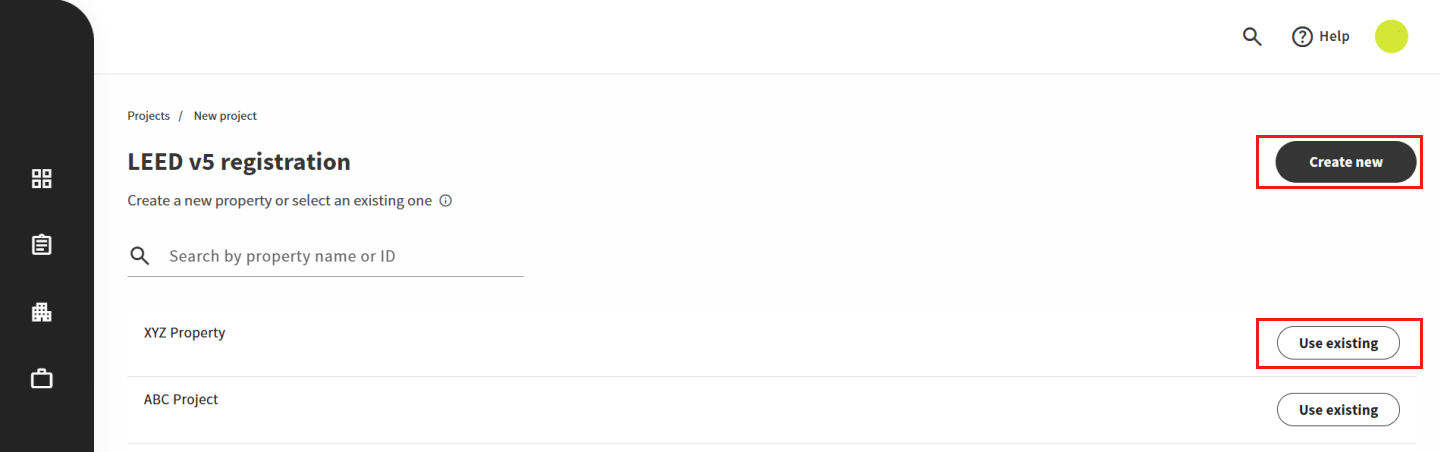
Sample of ARC website. Learn how to use ARC.
There are a few elements of v5 that have really grabbed our attention and seem to call for special preparation:
Overall LEED structure: We now have three major Impact Areas to understand how LEED credits are impacting our world. A credit or category can span across these Impact Areas as they need to, but think of it as a way to hold a larger conversation about our impact. Simply stated these are:
Decarbonization
Ecological Preservation
Quality of life
Updated tools: There is a new ARC website to manage LEED v5 projects. You can access this by logging into your LEED online account and looking for v5 project registration on the right hand side. Past LEED projects will show up here as well. In addition, the Resource Library is coming out with a slew of calculators for project teams to store.
Pre-requisites: The industry processes and evolves by setting what was once a challenge to achieve as a requirement. While we will cover the full list of pre-reqs in our next post there are two changes that mean we will need to work with design teams to get involved sooner rather than later.
The Integrative Process (IP) has become an entire LEED section with three (3) prerequisites titled: Climate Resilience Assessment, Human Impact Assessment, and the Carbon Assessment.
Projects will now require a BECxP (Building Enclosure Commissioning Provider) on the project team. (We do this work too!)
Building Materials have always made up the bulk of our scope but now:
There will be a Life Cycle Analysis (LCA) as a Decarb requirement
BPDO (Building Product Disclosure and Optimization) will now be referred to as BPSP (Building Product Selection Procurement) and will add circular projects and social equity within the supply chain
Low Emitting materials and BPDO have merged into the BPSP
Zero waste plan: Version 4.1 did away with a waste plan requirement, but that is back, more stringent than ever. While this is just a plan, the objective is to really help the recycling industry get caught up with manufacturing.
We’ve survived and thrived in these changes before. Our founder, Chyanne, was accredited under LEED v2 and the first LEED projects in the office were v2009 (v3) for the Chicago Housing Authority and the Public Building Commission (PBC) of Chicago. These institutions required rigorous submittals for their LEED projects and we honed our process thanks to the mentorship of Deeta Bernstein and Helen Kessler. During the transition to v4, Deeta organized a learning share working group for the (PBC) where multiple project teams came together to share their developments. Following are some ways we learned to work through this.
Preparation Strategies
Find your community
The first step in preparing for new LEED versions, especially as a small firm, is to find your community. That’s where an organization like IL Green Alliance (or your local version) comes in handy - there are over 200k accredited LEED professionals going through these same challenges. Another great resource we use as an office is LEED user. They’re still updating to v5, but when things get going, it’s really helpful to have an easy-to-use reference that provides samples and has a community board for questions.
Develop the Tools
The next step is developing the tools you want to use. The USGBC is revamping their calculators and online submission platform with Arc. Don’t worry! LEED Online won’t be disappearing just yet, so those used to the old platform can still access their current projects in the current platform. In addition, it is still helpful to have report covers, submittal covers, and internal tracking tools to manage the project team.
We aim to organize all necessary information on one page so it can be located quickly. Over the course of v4, our team evolved to using the project management tool, Asana, to outline our goals and provide a transparent, accessible process for our project teams.
Help yourself to our v4 material document sheet to get you started.
Adapting to Market Changes
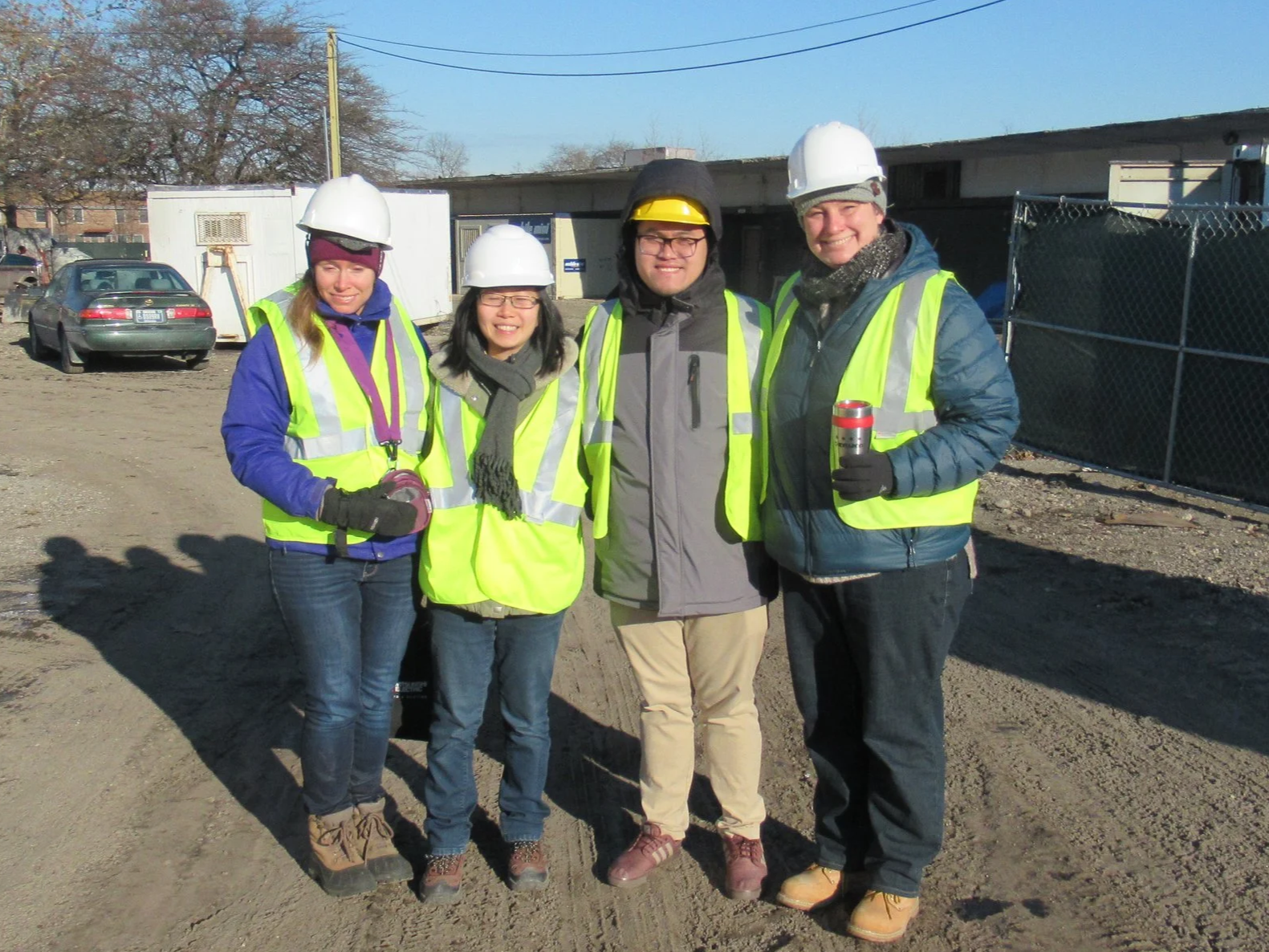
HUSARCH Team on a site visit to our first LEED v4 project in 2018!
Since LEED’s inception about 30 years ago, it has set a bar of achievement for sustainable building. But that bar continues to rise until we are creating net positive, renewable buildings that have cradle-to-cradle material cycles. The USGBC has set a target to update the LEED version every five years in order to continue pushing toward this positive future. In this current moment of transition, we are once again called to evolve alongside these higher expectations.
The real challenge lies in our ability to stay agile - adapting to new commentary, addenda, and shifting market demands. At HUS, we’ve historically met this challenge by expanding our expertise, such as becoming Building Envelope Commissioners (BECxP) and bringing building modeling and analysis in-house. While adding these services allows us to better understand building performance, we recognize that no single certification is a universal solution. Because these are living programs, our growth must be continuous. Every five-year LEED cycle is an opportunity to sharpen our skill sets and tackle new decarbonization tactics, pushing us closer to our ultimate goal: reversing man-made climate change and safeguarding the future for our cities and the generations to come.
As the standards rise, we rise with them
The transition to LEED v5 may be arriving faster than previous cycles, but speed doesn’t have to compromise excellence. By leaning into your professional community, developing project tracking tools, and maintaining an adaptable mindset, you can navigate this six-month window with confidence. At HUS, we’ve spent over a decade honing our process through every LEED iteration, and we are ready to tackle these new decarbonization and quality-of-life standards head-on. This transition is just one milestone on a much longer journey toward reversing climate change, and we are proud to be on that path with you.
Keep an eye out for our next post in this series and for future posts that will dive into the details of v5’s upgrades!

About HUSARCH
For more than 15 years and nearly 2 million sf of LEED certified spaces, our team has supported architects, contractors, and owners through the LEED process for both Design & Construction.
With our specialty in LEED administration, we translate requirements into clear action items, we help you build systems that support teams during construction, and we keep projects on track to achieve any desired LEED certification from pre-design through post-occupancy.
We’ve guided teams through the transition from LEED v2009 to LEED v4 and are excited to build upon our experience through this upcoming transition to v5.
Reach out if you need any assistance in your LEED transition, if you have any questions, or you’d like to request a blog topic!